We're in beta! If you find a bug or have feedback, let us know in our

Roman Carlisle Archaeology Dig at at Hadrian's Wall
Excavate the largest Roman building along Hadrian’s Wall
In a specific area
- Ongoing through June 9, 2026 at 7:00 AM
More Information
Hadrian’s Wall is a spectacular UNESCO World Heritage Site that marches 73 miles across northern Britain from Wallsend to Bowness-on-Solway and right through the city of Carlisle. Hadrian’s Wall was built by the Roman army on the orders of the emperor Hadrian following his visit to Britain in AD 122. It was the northwest frontier of the Roman empire for nearly 300 years.
Choose from one of two weeks to join the Roman Carlisle Archaeology dig, taking place at a site that was once an extremely important and well-defended location within the frontier system of Roman Britain and the most northern city in the Roman empire. It lies on the north bank of the river Eden close to a bridge that connected two Roman forts. The fort on the south side of the river, Luguvalium, was established under the Flavians. It was the most heavily defended location on Hadrian’s wall. On the north side of the river was Stanwix Fort which became the largest fort on Hadrian’s Wall, housing 1000 cavalry called the Ala Petriana.
In 2017, an astonishing archaeological discovery was made in Carlisle—the remains of a formerly unknown high-ranking imperial Roman bathhouse, and the largest building on Hadrian’s Wall. There is evidence that the site has direct imperial connections to Septimius Severus who was in residence here in the 210s AD. Could it be that Emperor Septimius Severus and his wife Julia Domna stayed here while in Carlisle? We hope to find out!
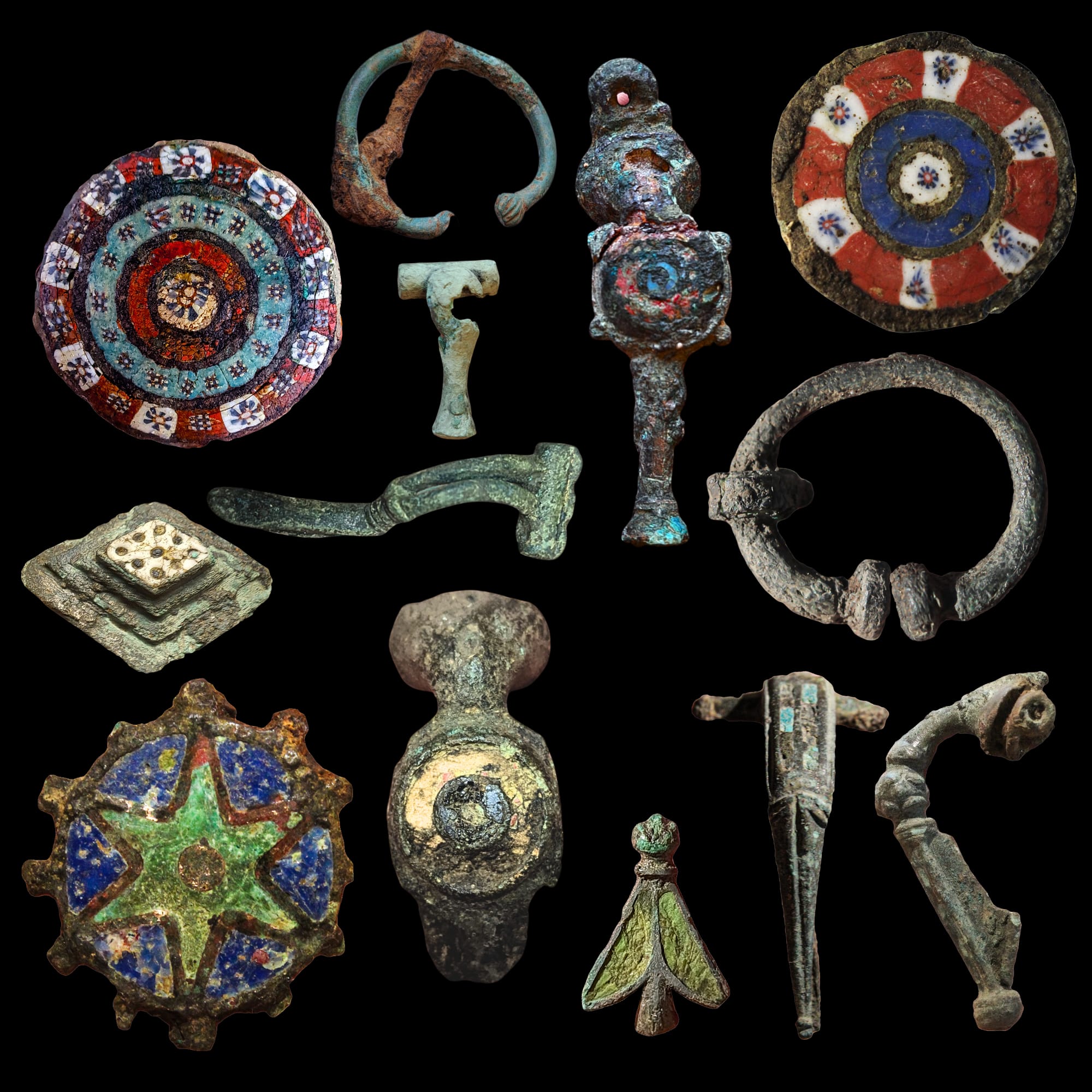
In the past two years, the finds continue to amaze. The site has yielded one of the largest collections of painted wall plaster and imperial tile stones in all of England. High status artifacts, statues and funerary items have also been unearthed. This year, you’ll work on an area south of the Roman Road. There are many unanswered questions and you will be instrumental in helping gather more information to understand how long was this area was in use and how it fit in with the timber buildings recorded earlier. You’ll also be tasked with helping to understand more about the complex series of floor surfaces at the northeastern corner of the site. It should be an extremely interesting season!
You will be hands-on for the entire six days of this excavation and will be encouraged to try as many different archaeological tasks as you like, including:
Excavation
Finds processing
Washing
Conservation
Ticket Required: No
Minimum Age: 13
Languages: English